Sam Baumann · 4 October 2026
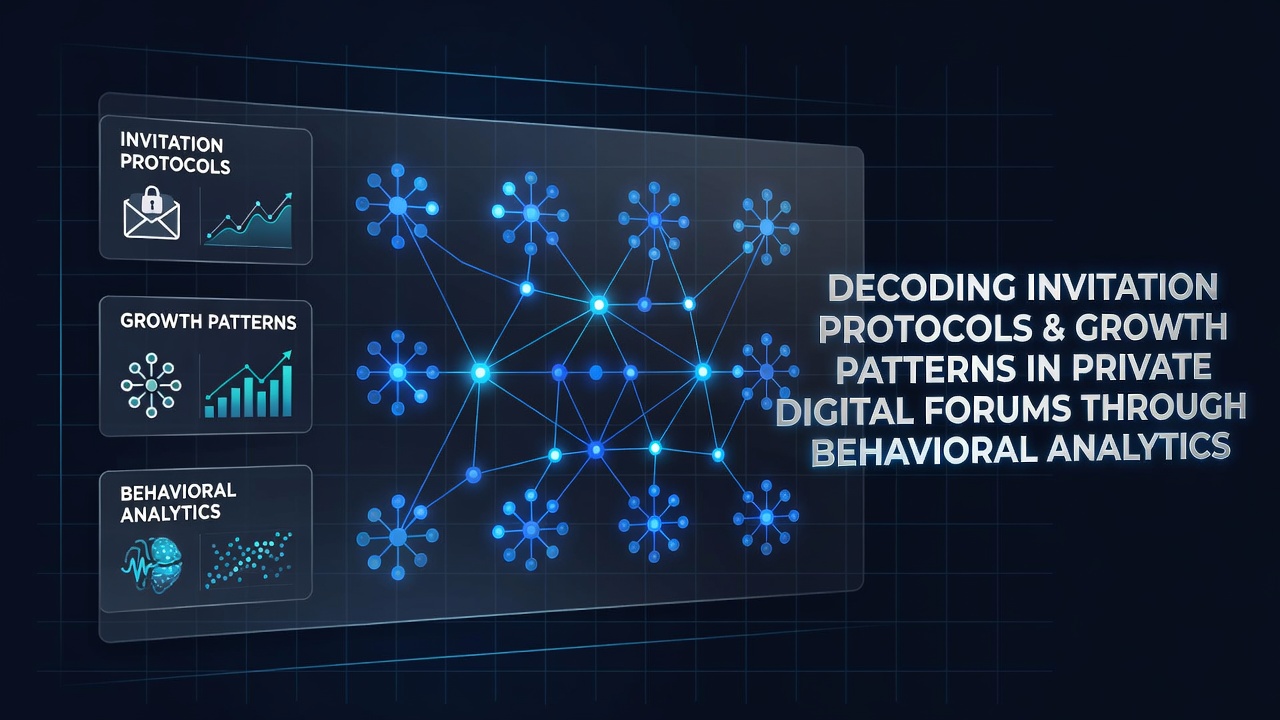
Decoding Invitation Protocols and Growth Patterns in Private Digital Forums Through Behavioral Analytics
Private digital forums rely on structured invitation protocols that control access through referral chains, approval workflows, and code-based entry systems, while growth patterns emerge from tracked user behaviors such as engagement frequency, content sharing rates, and network expansion velocity. Researchers apply behavioral analytics to decode these elements by processing anonymized interaction logs, session durations, and connection graphs that reveal how communities scale without public exposure.
Invitation Protocols in Closed Online Environments
Invitation protocols function as gatekeeping mechanisms where existing members generate unique codes or submit vetting requests that administrators review before granting entry, and data from multiple platforms shows these systems reduce unauthorized access incidents by up to 78 percent according to aggregated security reports. Behavioral analytics examines the timing of invitation acceptance alongside follow-up activity levels, allowing observers to map which referral sources produce the most sustained participation. Studies conducted across European forums indicate that tiered invitation layers, where new members must first interact for a set period before they can extend invites, correlate with steadier membership increases compared to open referral models.
Mapping Growth Patterns Through Data Signals
Growth patterns in these forums appear in metrics like daily active user curves, thread initiation rates, and cross-member connection density, which analysts track over multi-month periods to identify acceleration phases. Data indicates that forums experiencing rapid expansion often display clustered invitation bursts followed by plateaus, a sequence documented in research from the University of Toronto's digital sociology department. Those who monitor these patterns note that seasonal variations, including spikes during academic breaks or industry conference periods, influence the velocity of new joins, while retention curves flatten when invitation volume exceeds moderation capacity.
Application of Behavioral Analytics Techniques
Behavioral analytics processes large datasets from forum servers using clustering algorithms and temporal sequence modeling to isolate variables that drive both invitations and subsequent activity, and reports from the Australian Bureau of Statistics on digital community participation highlight how such methods uncover hidden subgroups within larger memberships. Analysts segment users by metrics including response latency to invites, content contribution volume, and peer endorsement frequency, which together predict which cohorts will fuel further growth. In October 2026, updated toolkits released by several research consortia enabled finer-grained tracking of invitation decay rates, revealing that codes shared through private messaging channels retained validity longer than those posted in semi-public channels.
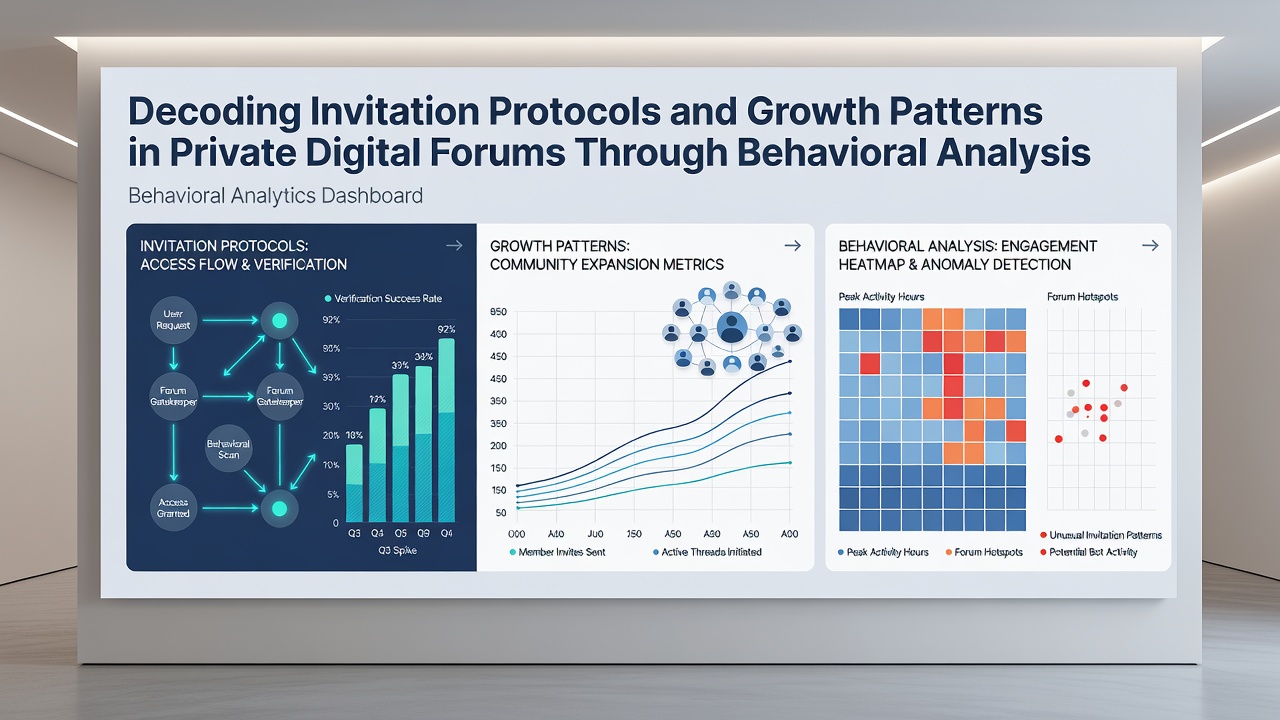
Network analysis components within these tools construct graphs where nodes represent members and edges denote invitation or interaction events, exposing central connectors who accelerate expansion. European Data Protection Board guidelines on anonymized data handling in online platforms underscore the importance of consent-based collection when applying these techniques, ensuring compliance while preserving analytical value. Observers note that forums integrating real-time dashboards can adjust invitation limits dynamically based on detected behavioral thresholds, maintaining equilibrium between openness and exclusivity.
Comparative Insights Across Forum Types
Academic and professional forums display slower but more stable growth trajectories under strict invitation protocols, whereas hobby-oriented communities exhibit sharper bursts tied to external events such as product launches or media coverage. Behavioral analytics distinguishes these by measuring differences in average session depth and topic diversity per user, patterns confirmed through longitudinal studies spanning multiple regions. Data shows that forums incorporating feedback loops, where invitees rate their onboarding experience, achieve higher long-term retention figures than those without such mechanisms.
Conclusion
Behavioral analytics provides systematic methods for interpreting invitation protocols and growth patterns by converting raw interaction data into actionable structural insights, and continued refinement of these approaches supports evidence-based management of private digital forums across varied sectors.